Let’s face it: very few people look forward to scheduling a colonoscopy. Between the dietary prep the day before and the thought of the exam itself, it is completely natural to feel a bit apprehensive.
Yet, a colonoscopy remains the undisputed gold standard for preventing colorectal cancer. Knowing exactly what happens during the procedure can replace anxiety with confidence.
At Greater New York Gastroenterology, PC, board-certified gastroenterologist Dr. Hon-Ming Eng provides gentle, highly personalized endoscopic care in Manhattan's Flatiron district. As an accredited office-based endoscopy center adhering to stringent New York State standards, our clinic ensures your screening is as private, efficient, and comfortable as possible.
Here’s what you can expect during each stage of your colonoscopy.
Step 1: Gentle sedation and preparation
When you arrive at our office, our clinical team will guide you to a private preparation area, review your medical history, and help you get settled comfortably on an exam stretcher.
Before the procedure begins, an intravenous (IV) line is placed to administer twilight sedation. Modern conscious sedation works quickly to keep you completely relaxed and pain-free throughout the entire exam. In fact, most patients drift off to sleep and have no memory of the procedure itself.
Step 2: The visual examination
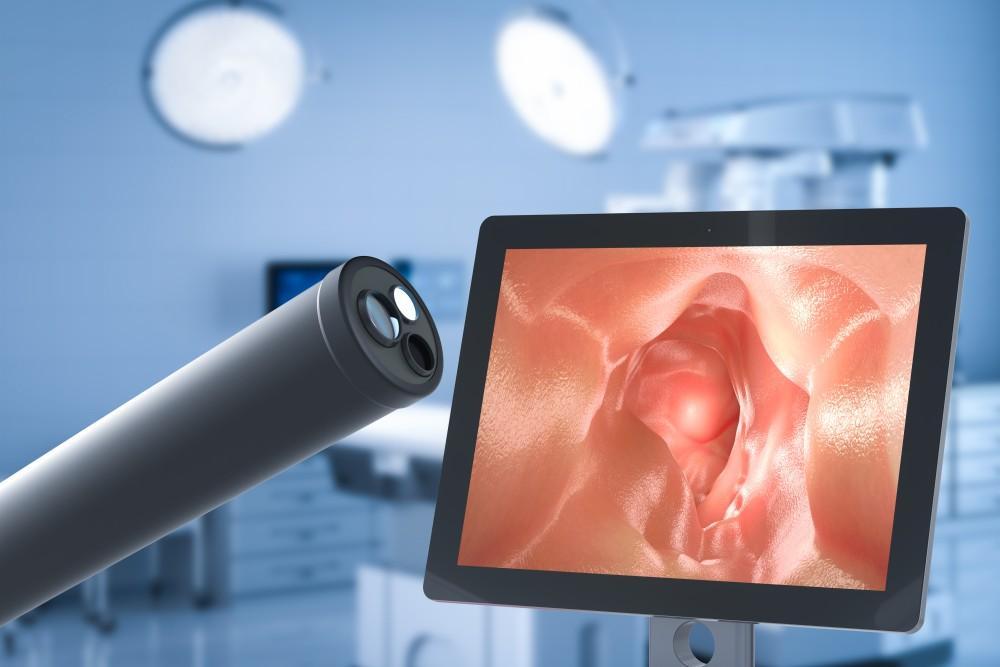
Once you are resting comfortably, Dr. Eng begins the examination using a colonoscope—a thin, flexible tube equipped with a high-definition camera and light source:
- The colonoscope is gently guided through your large intestine (colon) to the cecum, where the small and large intestines meet.
- A small, controlled amount of air or carbon dioxide is introduced to gently open the folds of your bowel, providing clear, high-magnification visualization.
- As the scope is slowly withdrawn, Dr. Eng meticulously inspects every inch of the intestinal lining for inflammation, tissue changes, or precancerous growths called polyps.
Step 3: Removing polyps on the spot
One of the greatest advantages of a colonoscopy over non-invasive stool tests is immediate intervention. According to clinical guidance from the American Society for Gastrointestinal Endoscopy (ASGE), removing precancerous adenomas significantly reduces both the incidence and mortality of colorectal cancer.
If Dr. Eng finds any polyps during your exam, he can remove them immediately using tiny, specialized instruments passed directly through the scope. Removing polyps is completely painless because the colon lining lacks sharp-pain nerve fibers. The removed tissue is then sent to our clinical laboratory for pathology testing.
Step 4: A smooth recovery
The active examination typically takes only 15 to 30 minutes. Afterward, you will rest in our comfortable recovery area as the sedative gently wears off, usually within 30 to 45 minutes:
- Dr. Eng will visit with you to discuss preliminary findings and answer any questions.
- Because sedation temporarily slows your reaction times, you will need a companion to escort you home safely.
- Most patients can resume eating normally right away and return to their regular work and exercise routines by the following morning.
An investment in your long-term health
While the prep the day before takes a little dedication, the colonoscopy itself is brief, painless, and provides invaluable peace of mind. Regular screening starting at age 45 is one of the most proactive steps you can take to safeguard your digestive health.
If you’re due or overdue for your screening, partner with a trusted specialist. Contact Dr. Hon-Ming Eng at Greater New York Gastroenterology, PC in New York, NY, at 646-876-5350 or request an appointment online today.